


Gaydoo
3.8632.00 Reviews
App Specs
- Version
- 3.1.0
- Updated On
- License
- Free
- Downloads
- 100,000+
- Developer
- TouchChat
- Categories
- Social
- Platform
- Android
Screenshots

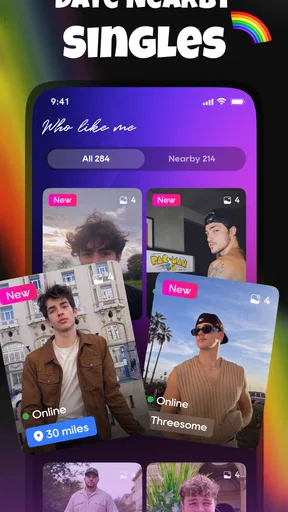


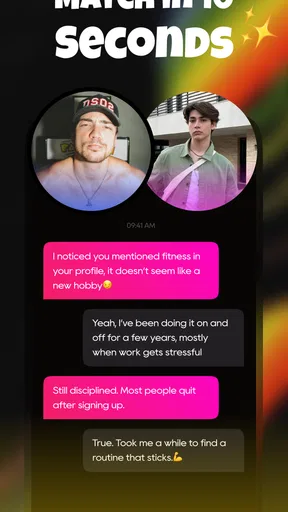
 Analysis by AppCompare
Gaydoo is a social app from TouchChat built around meeting men nearby, and my first impression is that it understands the appeal of local discovery immediately: open it when you have a free evening, see who may be close, and decide whether a conversation is worth starting. It is free to download, carries a Mature 17+ rating, and feels aimed at adults who want a direct way to explore gay connections rather than a broad social network filled with unrelated posts.
I found the app most interesting during the first few days, when every profile and nearby possibility felt new. That early curiosity is real, but it also raises the question that matters more than the initial download: does Gaydoo remain useful once the first wave of discovery is over? My answer is cautious but positive. It can earn a place on a phone for someone who regularly wants local gay social or dating possibilities, but it is less convincing for people who only want occasional entertainment or a highly polished, feature-heavy dating experience.
What the first week feels like
The strongest part of the first week is the low commitment. Since the app is free, I can try it without deciding immediately whether it deserves a subscription or a permanent place in my routine. That matters in this category, where many apps ask users to make a payment decision before they have even learned whether the nearby community is active enough for them.
The local focus also changes how I approach browsing. On a larger dating service, I often end up sorting through people who are technically within a wide area but not realistically convenient. Gaydoo’s central idea is more immediate: it is about real guys near you. That makes it suitable for a spontaneous coffee, a conversation after work, or finding people in the same general area during a trip.
At the same time, proximity should not be mistaken for compatibility. Someone nearby may have completely different intentions, communication habits, or expectations. I would treat location as a starting filter, not as evidence that a meeting will be worthwhile. The best early workflow is to browse slowly, read profiles carefully, and use conversation to establish basic comfort before making plans.
One useful habit is to avoid judging the app during a single quiet session. Local social apps can feel very different depending on the time of day, your area, and how recently nearby users have been active. I would check it across several ordinary moments rather than opening it once, seeing a limited selection, and assuming that is the whole experience.
Who gets the most from the local approach
Gaydoo makes the most sense for someone who values physical distance over endless choice. If you live in an area where meeting other gay men can otherwise require substantial travel or repeated visits to the same venues, a location-oriented app can make discovery more practical. It may also help people who are new to a city and want to understand what kind of social possibility exists nearby.
Worth Reading Before You Choose

EA SPORTS FC Mobile 26 Is a Bigger Football Game, but It Takes Time

Flipboard Shows What News Apps Must Do Beyond the Feed

Switching to Android Auto Means Rethinking Your Driving Routine

Google Calendar Makes a Crowded Week Easier to Manage

Ludo King Makes the Most of the Minutes Between Plans

Baby Panda World Brings Quick Play to Modern Phones, but Its Game Library Feels Busy
I can also see a use for people who are not ready to commit to a conventional dating identity. The app’s social category leaves room for conversation and connection, rather than forcing every interaction into a formal relationship path. That flexibility is useful, although it means users need to communicate clearly instead of assuming everyone wants the same thing.
It is a weaker fit for anyone seeking a carefully curated matchmaking process. If your priority is detailed compatibility scoring, extensive identity prompts, or a large set of relationship filters, a more established dating alternative may feel more structured. Gaydoo’s appeal is immediacy and locality, not a promise that an algorithm will do the emotional sorting for you.
Making the first conversations safer and more useful
My practical advice is to use the first exchange as a screening step, not as a race toward meeting. Ask a simple question that reveals whether the other person actually read your profile and whether the conversation feels reciprocal. Short replies are not automatically a problem, but a pattern of pressure, evasiveness, or disrespect is a good reason to stop.
For a first meeting, I would choose a public place, tell someone I trust where I am going, and keep my own transport or exit plan. Those are sensible habits for any location-based social app, but they are especially important when the central benefit is that a stranger may be physically close. Convenience should never remove your control over the situation.
I would also avoid putting too much personal information into a public-facing profile. Being specific enough to show personality is helpful; sharing a precise home location, workplace details, or a predictable daily routine is not necessary to start a good conversation. The app becomes more useful when it helps people connect without encouraging oversharing.
Does it keep earning attention after the novelty?
The month-to-month value depends almost entirely on whether your local area produces fresh, worthwhile interactions. That is the key trade-off. A nearby-focused service can be more relevant than a huge national pool, but it can also feel repetitive sooner if the same profiles appear regularly or if the active community is small.
I would not open Gaydoo every day simply out of habit. For me, its recurring value is more event-driven: checking in when I have moved, want to meet people in a different part of town, have an open weekend, or feel ready to start a new conversation. That is a healthier pattern than compulsive browsing, and it suits an app whose main practical question is who is available around me now.
The app’s current version is 3.1.0, and its release date was May 23, 2024. Those details place it in a relatively recent stage of its life, so I would pay attention to how consistently the experience develops over time rather than assuming that the first version I see defines its long-term direction. A social app needs ongoing participation and maintenance from both its developer and its community to avoid becoming a stale directory.
TouchChat has an opportunity here to make repeat visits feel purposeful without turning the product into a noisy stream. The best long-term experience would help users distinguish genuinely available people from profiles that are merely nearby, while keeping the interface simple enough that checking in does not feel like administrative work. I would rather have fewer relevant possibilities than a crowded screen that encourages endless swiping.
What keeps the app useful from one month to the next
My suggested routine is deliberately light. Check in when you have a real reason to connect, refresh your own profile when your availability or intentions change, and remove conversations that have clearly gone nowhere. This prevents the app from becoming a pile of abandoned chats and makes it easier to recognize new people when they appear.
That profile maintenance is more important than it sounds. A local app depends on context: whether you are looking for conversation, dating, friendship, or something more casual. If your profile gives no indication of what you want, you may receive more messages but spend more time correcting misunderstandings. A short, honest description can save more effort than a clever but vague one.
Another useful trade-off is resisting the urge to treat every nearby profile as a potential obligation. You do not need to answer everyone, and you do not need to arrange a meeting simply because the distance is convenient. The app works better when proximity creates an option, not pressure.
Free access and the role of purchases
The free entry point is a genuine advantage because it lets me assess the local experience before spending anything. There are in-app purchases ranging from $9.99 to $99.99 per item, so I would be careful about paying until I know exactly what extra value I am receiving and whether the free experience already covers my needs.
For a casual user, a large purchase can be difficult to justify if the local pool is limited or if conversations rarely develop. Someone who uses the app regularly and finds that a paid option directly improves a repeated workflow may see it differently. My rule would be simple: pay only for a specific benefit that solves a problem I have already experienced, not for the hope that spending will make the community more active or make a weak match become a strong one.
This is also where Gaydoo differs from the usual alternatives. Large dating platforms often offer broader discovery, more mature filtering systems, and a bigger range of social intentions, but they can feel crowded and less local. Gaydoo’s narrower purpose may reduce noise, yet that same focus makes the quality of your local user base much more important. Neither approach is automatically better; the right choice depends on whether you prefer relevance nearby or volume across a wider area.
Where the maintenance starts to show
The main maintenance burden is not technical complexity. It is social housekeeping. I would need to keep my profile accurate, manage conversations, decide when to disengage, and stay alert to the difference between a promising exchange and someone who is simply passing time. That work exists on other dating apps too, but a local service can make it feel more immediate because inactive or familiar profiles become noticeable more quickly.
There is also a privacy-maintenance habit to develop. Because the app is built around nearby people, I would review what my profile reveals whenever I change photos, add routine details, or mention places I visit. A profile can become identifying through small pieces of information combined together. Keeping the presentation personable without making my daily life traceable is an ongoing balance.
Users should also expect to do their own expectation management. The store summary is concise, and the short description presents the app as Gaydoo, but those phrases do not replace a conversation about intentions. I would ask directly and respectfully what someone is hoping to find before investing time or arranging a meeting. That single step prevents the app from becoming frustrating through avoidable misunderstandings.
Why fatigue can arrive
The first source of fatigue is repetition. If the same nearby profiles return often, browsing can stop feeling like discovery and start feeling like checking a noticeboard that has not changed. This is not necessarily a flaw in the concept; it is a natural consequence of serving a specific local audience. Still, it limits how often I would want to use the app.
The second is conversational imbalance. A nearby match is only valuable if both people participate. If too many interactions become one-sided, vague, or abruptly abandoned, the convenience of the location filter does not compensate for the emotional drain. I would protect my time by moving on quickly from conversations that show no curiosity or respect.
The third is the temptation to confuse activity with progress. Opening the app repeatedly can create the feeling that I am doing something social, even when I am only scrolling. To keep it from becoming a habit with no reward, I would set a practical purpose for each visit: update my profile, reply to a promising person, or look for a realistic plan. If none of those goals applies, closing the app is probably the better choice.
People who dislike direct conversations may find this especially tiring. Gaydoo’s value is not that it eliminates uncertainty; it simply brings potential connections closer geographically. If you want an app that handles more of the matching process for you, a conventional dating service with deeper preference tools may be a better fit.
My long-term verdict
After the novelty fades, Gaydoo earns lasting space only when local relevance is genuinely important. I would recommend trying it if you want a free, focused way to meet gay men in your area and are comfortable doing the communication and safety work yourself. Its 100K+ installs and average rating of 3.8 show that it has attracted a meaningful audience, while the 2.2K ratings and 632 reviews suggest there is enough user feedback for a prospective downloader to approach it with realistic expectations rather than treating it as an unknown experiment.
I would skip it if you expect a consistently busy community everywhere, a highly refined matchmaking system, or a completely hands-off route to meeting people. The app cannot make distance the only thing that matters, and it cannot guarantee that nearby users will be active, compatible, or respectful. Those limitations are central to the experience, not minor details to overlook.
For me, the best way to use it is selectively: install it because you have a real local reason, give the free version enough time to judge the community, keep your profile clear, and avoid paying until a recurring need makes the value obvious. That approach keeps the app from becoming another source of endless scrolling while preserving its strongest quality, which is the chance to turn online discovery into a practical nearby connection.
In the end, Gaydoo is more useful as a focused local tool than as an all-purpose social universe. It may not replace larger alternatives for everyone, but it can complement them when being close matters more than having the biggest possible selection. If that matches how you actually meet people, it is worth trying; if not, its narrow focus will probably feel limiting once the first-week curiosity disappears.
Pros
- Simple interface makes browsing profiles quick and easy.
- Useful discovery tools help users find nearby LGBTQ+ people.
- Profile photos and basic details are easy to view at a glance.
- The app encourages social interaction beyond traditional dating.
- Suitable for users seeking LGBTQ+ connections in one place.
Cons
- The active user base may vary considerably by location.
- Some features may require an in-app purchase or subscription.
- Profile quality can be inconsistent
- with limited personal information.
- Users should review privacy settings before sharing personal details.
- Occasional inactive or outdated profiles may reduce match quality.
FAQs for Gaydoo
What is Gaydoo and what can I use it for?
Gaydoo is a social and community-focused app designed to help LGBTQ+ users connect, discover people, and interact in a more relevant environment. Depending on your location and the current version of the app, you may be able to create a profile, browse other members, exchange messages, and explore community-related content. Features and availability can vary by country, so it is worth checking the app listing before downloading.
Is Gaydoo free to download and use?
Gaydoo may be available to download at no initial cost, but some functions can be limited to registered users or offered through optional purchases and subscriptions. Before creating an account, review the pricing details shown in the App Store or Google Play listing, including renewal terms. Also check whether messaging, profile visibility, advanced discovery tools, or other features require payment.
Is Gaydoo safe and private to use?
As with any social or dating-style platform, your safety depends partly on the information you choose to share and how you interact with other members. Avoid publishing your home address, workplace details, financial information, or private documents. Use the app’s blocking and reporting tools when necessary, review its privacy policy, and arrange first meetings in public places if you decide to meet someone offline.
What information is required to create a Gaydoo account?
The registration process may request basic details such as an email address, username, date of birth, location, and profile information. Some versions may also support sign-in through an existing platform or ask for a profile photo. Read each permission request carefully and provide only information you are comfortable sharing. Age requirements and verification procedures may differ according to local rules and the app’s policies.
Does Gaydoo work on both Android and iPhone?
Gaydoo’s availability depends on the official distribution channels and your region. If an Android or iOS version is offered, download it through Google Play or the Apple App Store rather than from unofficial websites. Check the listed operating-system requirements, recent update date, and user reviews before installing. Older devices may experience compatibility, performance, or notification issues even when the app is technically supported.


